The Spinner Ring That Finally Replaces the Habit
Silent in meetings. Satisfying all day. Always on your finger — exactly where the habit happens. Built specifically for the hands that can't stop.
Shop All Rings →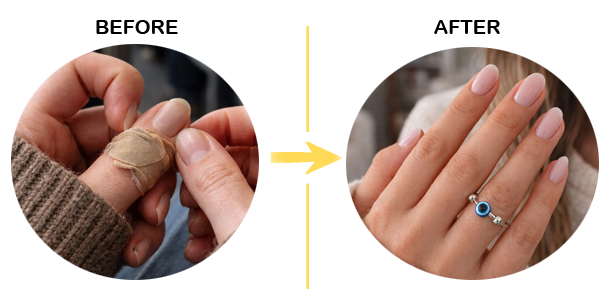
How a Spinner Ring Breaks the Cycle
Grounded in the same habit-replacement principle therapists use for BFRBs. No apps. No sessions. Just a quiet tool that lives where the habit lives.
The Urge Arrives
Stress, boredom, or a hard moment triggers the tactile itch. Your fingers start hunting for their usual target.
The Ring Answers First
Before the habit takes over, you spin the outer band. Quiet. Satisfying. Your hands get the input they were chasing — without the damage.
The Pattern Breaks
Over weeks, the ring absorbs the craving. Your nails grow back. The loop quiets. The exception becomes the rule.
Our Best-Selling Anxiety Rings
-
The Sunbloom Ring
Beauty that does something.The Sunbloom is a sunflower disc that spins freely on a slim band — the petals catch light, the motion catches the urge. Built for the people who pick when they're overwhelmed and need a focal point that doesn't look clinical. Habit Reversal Training built into a...Shop NowRegular price $32.99Regular priceUnit price per -
The Sunstone Ring
Warmth you can hold.A sun-ray crown wrapped around a soft glowing cabochon — with a tiny crystal sitting exactly where your thumb lands when you reach for your nails. Designed for the version of anxiety that creeps in before you notice it: the early-meeting tightness, the long-line waiting, the late-afternoon...Shop NowRegular price $32.99Regular priceUnit price per -
★ Best Seller
The Radiant Sun Ring
Visual weight when you need it. Some days the small ring isn't enough — the urge is louder, the meeting is longer, the stress is heavier. The Radiant Sun is built for those days: a detailed sunburst with crystal pavé across the full ray-spread, plus a single accent stone on...Shop NowRegular price $38.99Regular priceUnit price per -
The Lunar Ring
For anxiety that doesn't shout.Some anxiety arrives loud — racing heart, clenched jaw. The Lunar Ring is built for the other kind: the slow background hum that builds through the day until your hands have already done the damage. The moonstone catches your eye; the small crystal sits exactly where...Shop NowRegular price $27.99Regular priceUnit price per


Real Stories, Real Relief
Here's what changed for real people who stopped picking.
Find the Ring That Fits Your Life
-
The Lunar Ring
For anxiety that doesn't shout.Some anxiety arrives loud — racing heart, clenched jaw. The Lunar Ring is built for the other kind: the slow background hum that builds through the day until your hands have already done the damage. The moonstone catches your eye; the small crystal sits exactly where...Shop NowRegular price $27.99Regular priceUnit price per -
The Tactile Ring
The most sensory ring we make.Seven beads alternating between mirror-smooth and frosted finish — a different feeling under your thumb every spin. Built for the people whose nail picking is sensory-driven, not just stress-driven. Habit Reversal Training in its most tactile form: when the urge hits, the texture catches your...Shop NowRegular price $27.99Regular priceUnit price per -
The Sapphire Eye Ring
A protective eye, refined.The Sapphire Eye uses a pavé crystal eye in a marquise shape — the same protective symbol, executed in fine-jewelry detail. Sapphire-blue center stone, white pavé surround, twisted-rope band. Built for customers who love the meaning behind evil-eye jewelry but prefer a more elevated daily aesthetic. Tactile-grounding...Shop NowRegular price $38.99Regular priceUnit price per -
The Star Ring
Subtle by design.A small five-point star sits between two textured beads on a twisted-rope band — three things to spin, three places to land your thumb when the urge hits. Built for the people whose anxiety is quiet but constant: meetings, traffic, doctor's offices, the long pause before bed. Small...Shop NowRegular price $22.99Regular priceUnit price per


Before vs. After
What most people experience within the first 30 days of consistent wear.
Common Questions
Everything you need to know before making the decision
Our Latest Blog
-

Does Anxiety Cause Nail Picking?
The short answer is: yes, anxiety causes nail picking — but the relationship is more specific and interesting than simple cause-and-effect. Understanding the mechanism helps you interrupt it more effectively. The Direct Connection Anxiety activates the body's stress response — elevating cortisol, tensing muscles, narrowing attention. For people with established nail picking habits, this physiological activation reliably triggers the picking behavior because the nervous system has learned: elevated stress state → hands → temporary relief. This is not a metaphor. It's a conditioned neurological pathway. The association between anxiety and picking has been reinforced hundreds or thousands of times until it operates below the level of conscious decision-making. But Anxiety Isn't the Only Trigger One of the most important things to understand about nail picking: it's not exclusively triggered by anxiety. It's also triggered by: boredom and understimulation (the opposite of anxiety), specific environmental cues (TV, phone calls, waiting), and sensory triggers (rough edges, perceived imperfections). This is why simply "reducing anxiety" doesn't automatically eliminate nail picking — the behavior has multiple routes to activation. The Anxiety Loop Anxiety → picking → shame → more anxiety → more picking. Breaking this loop requires addressing both sides: the anxiety driving the initial behavior and the shame response that re-fuels it. What This Means Practically Because anxiety is a significant trigger, anxiety management practices (breathing, exercise, therapy) can reduce picking frequency. But they work best when combined with a direct behavioral intervention — a competing response that addresses the picking impulse directly, regardless of what triggered it. 📖 Related Reading 7 Signs Your Anxiety Is Living in Your Hands The Nail Picking Shame Cycle — And How to Break It What Your Nail Picking Is Actually Trying to Tell You → Address the impulse directly with a behavioral tool — The Serene Ring
Does Anxiety Cause Nail Picking?
The short answer is: yes, anxiety causes nail picking — but the relationship is more specific and interesting than simple cause-and-effect. Understanding the mechanism helps you interrupt it more effectively. The Direct Connection Anxiety activates the body's stress response — elevating cortisol, tensing muscles, narrowing attention. For people with established nail picking habits, this physiological activation reliably triggers the picking behavior because the nervous system has learned: elevated stress state → hands → temporary relief. This is not a metaphor. It's a conditioned neurological pathway. The association between anxiety and picking has been reinforced hundreds or thousands of times until it operates below the level of conscious decision-making. But Anxiety Isn't the Only Trigger One of the most important things to understand about nail picking: it's not exclusively triggered by anxiety. It's also triggered by: boredom and understimulation (the opposite of anxiety), specific environmental cues (TV, phone calls, waiting), and sensory triggers (rough edges, perceived imperfections). This is why simply "reducing anxiety" doesn't automatically eliminate nail picking — the behavior has multiple routes to activation. The Anxiety Loop Anxiety → picking → shame → more anxiety → more picking. Breaking this loop requires addressing both sides: the anxiety driving the initial behavior and the shame response that re-fuels it. What This Means Practically Because anxiety is a significant trigger, anxiety management practices (breathing, exercise, therapy) can reduce picking frequency. But they work best when combined with a direct behavioral intervention — a competing response that addresses the picking impulse directly, regardless of what triggered it. 📖 Related Reading 7 Signs Your Anxiety Is Living in Your Hands The Nail Picking Shame Cycle — And How to Break It What Your Nail Picking Is Actually Trying to Tell You → Address the impulse directly with a behavioral tool — The Serene Ring
-

Nail Picking While Driving: Why It Happens and How to Stop It
Driving is one of the most underreported nail and cuticle picking triggers. If you've noticed your hands consistently moving to your nails during commutes, long drives, or traffic jams — there's a precise neurological explanation for it. Why Driving Creates the Perfect Storm Three conditions converge behind the wheel that reliably activate nail picking: partial attention (your brain is engaged but not fully occupied), constrained body movement (you're stationary and cannot walk, stand, or shift position), and variable stress (traffic, navigation decisions, and time pressure create unpredictable anxiety spikes). This combination — partial cognitive engagement + physical restriction + intermittent stress — is exactly the profile that activates BFRB behaviors. Why Traffic Specifically Makes It Worse During smooth driving, your hands have a task: steering. But at red lights, in traffic, or on familiar autopilot routes, the hands are relatively free. The brain, now understimulated in its primary task, begins looking for sensory input — and the nails are immediately available. Why This Is Harder to Address Than Most Settings Most competing response strategies depend on visual attention or deliberate choice. While driving, your visual attention is (appropriately) on the road, making it harder to catch the picking moment early. The behavior can continue for entire commutes without conscious awareness. What Works in the Car Steering wheel texture awareness: Some people find that actively gripping and feeling the steering wheel texture provides enough tactile input to reduce the impulse. Spinner ring on the dominant picking hand: A ring on the index or middle finger of the picking hand means any unconscious finger movement contacts the ring first — interrupting the nail-reach before it completes. Audiobooks and podcasts: Increasing cognitive engagement during the drive reduces the understimulation component that triggers picking. Pre-drive nail file: Removing rough edges before a long commute significantly reduces in-car picking incidents. 📖 Related Reading Why You Can't Stop Picking Your Nails While Watching TV 7 Signs Your Anxiety Is Living in Your Hands Habit Reversal Training: Applying the Competing Response → The Serene Ring — the competing response that's always on your hand — The Serene Ring
Nail Picking While Driving: Why It Happens and How to Stop It
Driving is one of the most underreported nail and cuticle picking triggers. If you've noticed your hands consistently moving to your nails during commutes, long drives, or traffic jams — there's a precise neurological explanation for it. Why Driving Creates the Perfect Storm Three conditions converge behind the wheel that reliably activate nail picking: partial attention (your brain is engaged but not fully occupied), constrained body movement (you're stationary and cannot walk, stand, or shift position), and variable stress (traffic, navigation decisions, and time pressure create unpredictable anxiety spikes). This combination — partial cognitive engagement + physical restriction + intermittent stress — is exactly the profile that activates BFRB behaviors. Why Traffic Specifically Makes It Worse During smooth driving, your hands have a task: steering. But at red lights, in traffic, or on familiar autopilot routes, the hands are relatively free. The brain, now understimulated in its primary task, begins looking for sensory input — and the nails are immediately available. Why This Is Harder to Address Than Most Settings Most competing response strategies depend on visual attention or deliberate choice. While driving, your visual attention is (appropriately) on the road, making it harder to catch the picking moment early. The behavior can continue for entire commutes without conscious awareness. What Works in the Car Steering wheel texture awareness: Some people find that actively gripping and feeling the steering wheel texture provides enough tactile input to reduce the impulse. Spinner ring on the dominant picking hand: A ring on the index or middle finger of the picking hand means any unconscious finger movement contacts the ring first — interrupting the nail-reach before it completes. Audiobooks and podcasts: Increasing cognitive engagement during the drive reduces the understimulation component that triggers picking. Pre-drive nail file: Removing rough edges before a long commute significantly reduces in-car picking incidents. 📖 Related Reading Why You Can't Stop Picking Your Nails While Watching TV 7 Signs Your Anxiety Is Living in Your Hands Habit Reversal Training: Applying the Competing Response → The Serene Ring — the competing response that's always on your hand — The Serene Ring
-

How to Stop Picking Cuticles: The Specific Strategies That Work
Cuticle picking and nail picking are closely related — but cuticle picking has its own specific triggers and patterns that are worth addressing separately. If your hands are drawn specifically to the skin around your nails rather than the nail itself, here's what's driving it and what actually helps. What Cuticle Picking Actually Is Cuticle picking is a form of dermatillomania (compulsive skin picking) focused specifically on the periungual skin — the cuticles, the skin folds alongside the nail, and the hangnail zones. Like nail picking, it falls under the BFRB umbrella and is driven by the same nervous system regulation mechanism. The "Hangnail Loop" The most common trigger for cuticle picking is a small piece of lifted skin — a hangnail or dry cuticle edge — that the brain registers as an imperfection to be removed. This is the perfectionism loop at its most specific: the more you pick, the more rough edges appear, the more picking follows. The loop is often more intense for cuticle picking than for nail picking because cuticle skin tears more easily and visibly. Why Cuticles Are Particularly Vulnerable Cuticle skin is thinner and more prone to dryness than the nail plate Cold weather, frequent handwashing, and hand sanitizer all accelerate cuticle dryness Hangnails form naturally and provide a constant supply of "something to fix" What Actually Helps Cuticle oil daily (non-negotiable): Hydrated cuticles have far fewer rough edges — this directly reduces the trigger. Apply morning and night. This is the highest-ROI single change you can make. Cuticle scissors, not picking: When a hangnail genuinely needs addressing, use proper cuticle scissors to remove it cleanly. This meets the "fix it" urge without the tearing that creates more rough edges. Competing response: A spinner ring worn specifically on the index finger — the most common cuticle-picking hand — provides the fingertip stimulation that redirects the impulse before it becomes a cuticle reach. The Moisturizer Strategy Keep a small cuticle oil pen or hand cream in every location where picking typically happens: desk, bedside table, car, bag. When you feel the urge to pick, apply the oil instead. This substitution addresses the "hands want to do something" impulse with something that actively improves the trigger condition. 📖 Related Reading What Happens to Your Nails When You Finally Stop Picking Them Skin Picking vs. Nail Picking: What They Share Habit Reversal Training: How to Apply It Yourself → The Serene Ring — worn on the finger where cuticle picking starts
How to Stop Picking Cuticles: The Specific Strategies That Work
Cuticle picking and nail picking are closely related — but cuticle picking has its own specific triggers and patterns that are worth addressing separately. If your hands are drawn specifically to the skin around your nails rather than the nail itself, here's what's driving it and what actually helps. What Cuticle Picking Actually Is Cuticle picking is a form of dermatillomania (compulsive skin picking) focused specifically on the periungual skin — the cuticles, the skin folds alongside the nail, and the hangnail zones. Like nail picking, it falls under the BFRB umbrella and is driven by the same nervous system regulation mechanism. The "Hangnail Loop" The most common trigger for cuticle picking is a small piece of lifted skin — a hangnail or dry cuticle edge — that the brain registers as an imperfection to be removed. This is the perfectionism loop at its most specific: the more you pick, the more rough edges appear, the more picking follows. The loop is often more intense for cuticle picking than for nail picking because cuticle skin tears more easily and visibly. Why Cuticles Are Particularly Vulnerable Cuticle skin is thinner and more prone to dryness than the nail plate Cold weather, frequent handwashing, and hand sanitizer all accelerate cuticle dryness Hangnails form naturally and provide a constant supply of "something to fix" What Actually Helps Cuticle oil daily (non-negotiable): Hydrated cuticles have far fewer rough edges — this directly reduces the trigger. Apply morning and night. This is the highest-ROI single change you can make. Cuticle scissors, not picking: When a hangnail genuinely needs addressing, use proper cuticle scissors to remove it cleanly. This meets the "fix it" urge without the tearing that creates more rough edges. Competing response: A spinner ring worn specifically on the index finger — the most common cuticle-picking hand — provides the fingertip stimulation that redirects the impulse before it becomes a cuticle reach. The Moisturizer Strategy Keep a small cuticle oil pen or hand cream in every location where picking typically happens: desk, bedside table, car, bag. When you feel the urge to pick, apply the oil instead. This substitution addresses the "hands want to do something" impulse with something that actively improves the trigger condition. 📖 Related Reading What Happens to Your Nails When You Finally Stop Picking Them Skin Picking vs. Nail Picking: What They Share Habit Reversal Training: How to Apply It Yourself → The Serene Ring — worn on the finger where cuticle picking starts
-

What Happens to Your Nails When You Finally Stop Picking Them
For many people who have been picking their nails for years — sometimes decades — the idea that their nails might actually grow feels abstract. Here's what recovery actually looks like, physically and emotionally. Week 1–2: Stabilization The most visible change: the absence of new damage. Existing damage stabilizes. Nails still look short and uneven — but the active damage stops. Week 3–4: The First Growth A small white crescent at the tip of a nail. A millimeter of growth on one finger, then two. Nail growth rates approximately 3mm per month — after 3–4 weeks of consistent redirection, visible growth is almost always present. Many Serene Ring customers describe this moment as unexpectedly emotional — seeing something they haven't seen for years, on their own hands. Month 2–3: The Shape Establishes By weeks 6–8, nails that were consistently damaged begin showing their natural shape for the first time. Even nails picked to near nothing can grow out completely within 2–3 months given time and no new damage. Months 4–6: Full Recovery Full visual recovery — nails that look healthy, even, and intact — is achievable within 4–6 months. The vast majority of picking-related damage is reversible. The Emotional Milestones The first "hands in a photo" moment — not hiding them, not thinking about it The handshake without self-consciousness Applying hand cream without quiet resignation The mental bandwidth freed from no longer managing the habit 24/7 📖 Related Reading The Evil Eye: 3,000 Years of History and Why It Belongs on the Finger What Your Nail Picking Is Actually Trying to Tell You The Shame Cycle: Understanding What's Driving the Behavior → Start your timeline today — The Serene Ring
What Happens to Your Nails When You Finally Stop Picking Them
For many people who have been picking their nails for years — sometimes decades — the idea that their nails might actually grow feels abstract. Here's what recovery actually looks like, physically and emotionally. Week 1–2: Stabilization The most visible change: the absence of new damage. Existing damage stabilizes. Nails still look short and uneven — but the active damage stops. Week 3–4: The First Growth A small white crescent at the tip of a nail. A millimeter of growth on one finger, then two. Nail growth rates approximately 3mm per month — after 3–4 weeks of consistent redirection, visible growth is almost always present. Many Serene Ring customers describe this moment as unexpectedly emotional — seeing something they haven't seen for years, on their own hands. Month 2–3: The Shape Establishes By weeks 6–8, nails that were consistently damaged begin showing their natural shape for the first time. Even nails picked to near nothing can grow out completely within 2–3 months given time and no new damage. Months 4–6: Full Recovery Full visual recovery — nails that look healthy, even, and intact — is achievable within 4–6 months. The vast majority of picking-related damage is reversible. The Emotional Milestones The first "hands in a photo" moment — not hiding them, not thinking about it The handshake without self-consciousness Applying hand cream without quiet resignation The mental bandwidth freed from no longer managing the habit 24/7 📖 Related Reading The Evil Eye: 3,000 Years of History and Why It Belongs on the Finger What Your Nail Picking Is Actually Trying to Tell You The Shame Cycle: Understanding What's Driving the Behavior → Start your timeline today — The Serene Ring
-

When Is Nail Picking Serious Enough to See a Therapist?
One of the most common questions: "Is my nail picking bad enough to see a therapist?" It's the wrong question — but it reveals something real. Here's a better frame. A Better Question Instead of "Is my nail picking bad enough?" ask: "Is my nail picking causing problems in my life that I haven't been able to address on my own?" Professional support isn't a last resort for extreme cases — it's a practical resource for people whose behavior significantly affects their wellbeing. Signs That Professional Support Would Be Valuable Physical harm — Recurring infections, significant nail bed damage, permanent deformity. Significant distress — Shame, anxiety, or depression connected to picking that affects self-image or social participation. Functional impairment — Picking or its shame affecting work, relationships, or activities you care about. Self-directed approaches aren't working — Consistent HRT application for 6–8 weeks without meaningful improvement. Coexisting conditions — Nail picking alongside significant anxiety, OCD, depression, or ADHD benefits from integrated professional treatment. What to Look for in a Therapist Specific experience in BFRB treatment Familiarity with HRT, ComB, or CBT for OCD-spectrum conditions The TLC Foundation for BFRBs (bfrb.org) maintains a therapist directory Self-Help Is Legitimate For mild to moderate nail picking not causing physical harm or significant distress, self-directed HRT approaches are a reasonable starting point. Many people achieve meaningful change without professional support. 📖 Related Reading Habit Reversal Training: How to Apply It Yourself → Start with a self-directed tool while you explore options — The Serene Ring
When Is Nail Picking Serious Enough to See a Therapist?
One of the most common questions: "Is my nail picking bad enough to see a therapist?" It's the wrong question — but it reveals something real. Here's a better frame. A Better Question Instead of "Is my nail picking bad enough?" ask: "Is my nail picking causing problems in my life that I haven't been able to address on my own?" Professional support isn't a last resort for extreme cases — it's a practical resource for people whose behavior significantly affects their wellbeing. Signs That Professional Support Would Be Valuable Physical harm — Recurring infections, significant nail bed damage, permanent deformity. Significant distress — Shame, anxiety, or depression connected to picking that affects self-image or social participation. Functional impairment — Picking or its shame affecting work, relationships, or activities you care about. Self-directed approaches aren't working — Consistent HRT application for 6–8 weeks without meaningful improvement. Coexisting conditions — Nail picking alongside significant anxiety, OCD, depression, or ADHD benefits from integrated professional treatment. What to Look for in a Therapist Specific experience in BFRB treatment Familiarity with HRT, ComB, or CBT for OCD-spectrum conditions The TLC Foundation for BFRBs (bfrb.org) maintains a therapist directory Self-Help Is Legitimate For mild to moderate nail picking not causing physical harm or significant distress, self-directed HRT approaches are a reasonable starting point. Many people achieve meaningful change without professional support. 📖 Related Reading Habit Reversal Training: How to Apply It Yourself → Start with a self-directed tool while you explore options — The Serene Ring
-

Mindfulness for Nail Picking: What Works, What Doesn't, and the Key Distinction
Mindfulness is often recommended for nail picking. But the way most people apply it doesn't work — and understanding why illuminates both the limitation and the genuine opportunity. The Common (Ineffective) Approach Typical advice: "Just notice when you're picking. Be present. Observe without judgment. Then stop." This fails because noticing the behavior doesn't address what's driving it. Picking is a nervous system response — the system needs a sensory outlet. Observing it without providing an alternative doesn't satisfy the need. The urge returns immediately. What Mindfulness Actually Helps With Mindfulness is genuinely useful for a specific application: narrowing the gap between impulse and response. Most nail picking happens before the conscious mind registers an impulse. Mindfulness practice creates a small but crucial window between impulse and behavior. That window is where change becomes possible. The Practical Application Body scan practice: 5–10 minutes daily, specifically including the hands. Builds body awareness that catches picking impulses earlier in the chain. The "noticing moment": The specific skill to develop — catching your hands moving toward your nails before picking begins. This is the intervention point. Paired with a competing response: Mindfulness develops the awareness to catch early; the ring provides the sensory alternative that actually satisfies the urge. Without a satisfying response, awareness of the urge is just uncomfortable. The Non-Judgment Piece Noticing without self-criticism is genuinely useful. Every moment of picking noticed without judgment is a moment that doesn't add fuel to the shame cycle. Noticing + redirect (no shame) is far more productive than noticing + self-criticism (which generates more anxiety → more picking). 📖 Related Reading Habit Reversal Training: The Gold-Standard Method The Nail Picking Shame Cycle — And How to Break It What Your Nail Picking Is Trying to Tell You → Pair awareness with a tool that gives the impulse somewhere to go — The Serene Ring
Mindfulness for Nail Picking: What Works, What Doesn't, and the Key Distinction
Mindfulness is often recommended for nail picking. But the way most people apply it doesn't work — and understanding why illuminates both the limitation and the genuine opportunity. The Common (Ineffective) Approach Typical advice: "Just notice when you're picking. Be present. Observe without judgment. Then stop." This fails because noticing the behavior doesn't address what's driving it. Picking is a nervous system response — the system needs a sensory outlet. Observing it without providing an alternative doesn't satisfy the need. The urge returns immediately. What Mindfulness Actually Helps With Mindfulness is genuinely useful for a specific application: narrowing the gap between impulse and response. Most nail picking happens before the conscious mind registers an impulse. Mindfulness practice creates a small but crucial window between impulse and behavior. That window is where change becomes possible. The Practical Application Body scan practice: 5–10 minutes daily, specifically including the hands. Builds body awareness that catches picking impulses earlier in the chain. The "noticing moment": The specific skill to develop — catching your hands moving toward your nails before picking begins. This is the intervention point. Paired with a competing response: Mindfulness develops the awareness to catch early; the ring provides the sensory alternative that actually satisfies the urge. Without a satisfying response, awareness of the urge is just uncomfortable. The Non-Judgment Piece Noticing without self-criticism is genuinely useful. Every moment of picking noticed without judgment is a moment that doesn't add fuel to the shame cycle. Noticing + redirect (no shame) is far more productive than noticing + self-criticism (which generates more anxiety → more picking). 📖 Related Reading Habit Reversal Training: The Gold-Standard Method The Nail Picking Shame Cycle — And How to Break It What Your Nail Picking Is Trying to Tell You → Pair awareness with a tool that gives the impulse somewhere to go — The Serene Ring


